





















Lower back pain is one of the most common reasons people seek medical care, affecting millions of adults each year. Whether your discomfort started after lifting something heavy, sitting for long periods, or developed gradually over time, it can make everyday activities difficult. Good news! You can relieve lower back pain naturally.
Many people assume medication is the only solution. While medication can play a role in managing symptoms, current clinical guidelines recommend conservative treatments—including physical therapy, staying active, and targeted exercise—as first-line care for most cases of low back pain.
Physical therapy doesn’t just focus on reducing pain. It helps identify the underlying movement patterns, muscle imbalances, mobility restrictions, and strength deficits contributing to your symptoms so you can recover and reduce your risk of future episodes.
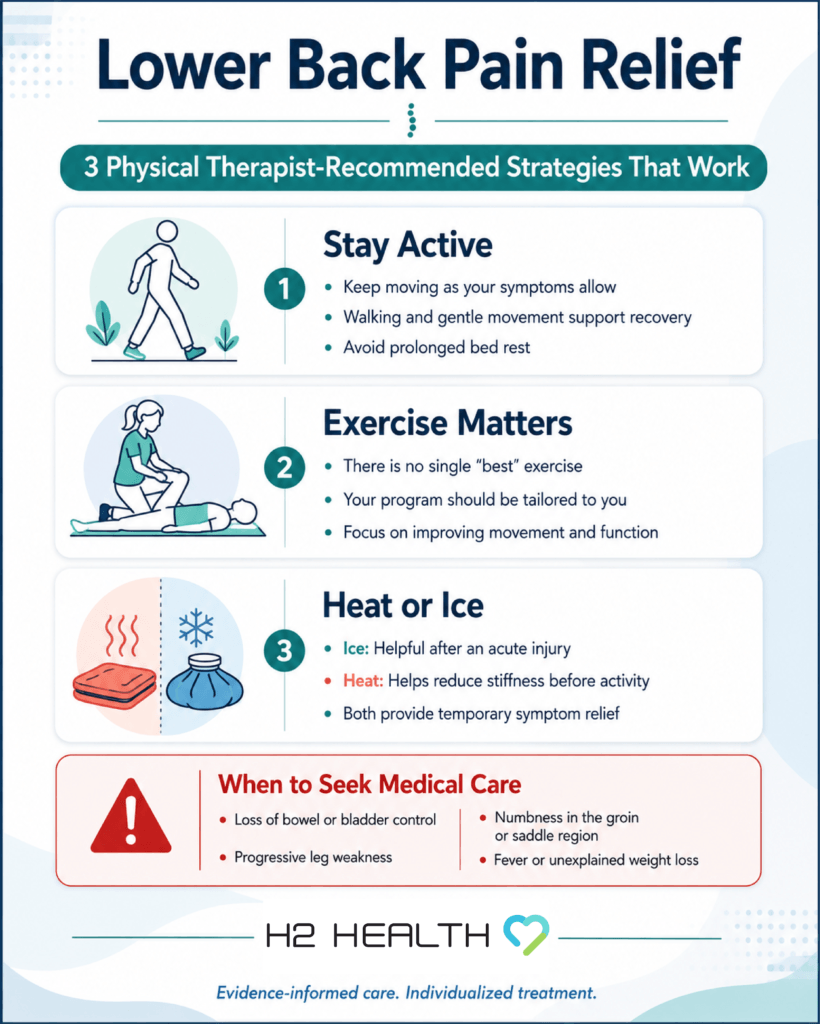
Below are three evidence-based strategies physical therapists commonly recommend to relieve lower back pain.
1. Improve Hamstring and Hip Mobility
Tight hamstrings and restricted hip mobility can increase stress on the lower back during activities like bending, lifting, and walking. While tight hamstrings aren’t the cause of every case of back pain, improving flexibility and movement throughout the hips and legs may help reduce strain on the lumbar spine.
Rather than forcing yourself to touch your toes, focus on gentle stretches that don’t increase your pain.
Examples include:
• Supine hamstring stretches with a towel or strap
• Seated hamstring stretches
• Hip flexor stretches
• Gentle mobility exercises prescribed by your physical therapist
A physical therapist can determine whether limited hamstring flexibility, hip stiffness, or another movement restriction is contributing to your symptoms and create an exercise program that’s appropriate for your condition.
Tip: Stretch to the point of mild tension—not pain—and avoid bouncing or forcing the movement.
2. Use Heat or Ice Based on Your Symptoms
Both heat and ice can provide temporary relief from lower back pain, but each works differently.
Ice may help:
• During the first 24–72 hours after an acute injury
• Reduce pain and inflammation
• Ease muscle spasms
Heat may help:
• Relax tight muscles
• Improve blood flow
• Reduce stiffness before gentle activity or exercise
Some people find alternating heat and ice helpful, while others respond better to one or the other. The best option often depends on the cause of your pain and your personal response.
Always place a towel between your skin and the heat or ice source, and limit treatments to about 15–20 minutes at a time.
Your physical therapist can help you determine which option is most appropriate for your symptoms.
3. Stay Active Instead of Staying in Bed
Years ago, extended bed rest was commonly recommended for back pain. Today, research shows that prolonged rest can actually delay recovery for most people with uncomplicated low back pain.
Instead, current guidelines encourage people to remain as active as their symptoms allow to relieve lower back pain.
Gentle movement may include:
• Walking
• Light stretching
• Changing positions frequently
• Completing your prescribed physical therapy exercises
• Gradually returning to normal daily activities
Movement helps maintain flexibility, improve circulation, prevent stiffness, and strengthen the muscles that support your spine.
If certain movements increase your pain significantly or you develop symptoms like numbness, weakness, or pain radiating below the knee, it’s important to be evaluated by a healthcare professional.
Should You Wear a Back Brace?
Back braces may be appropriate for some injuries or after certain surgeries, but they are not routinely recommended for most people with nonspecific low back pain. Relying on a brace for long periods may reduce opportunities to strengthen the muscles that naturally support your spine.
Your physical therapist can help determine whether temporary bracing is appropriate for your situation.
How Physical Therapy Helps Lower Back Pain
Every episode of back pain is different. That’s why effective treatment begins with a comprehensive evaluation rather than a one-size-fits-all approach.
Your physical therapist may assess:
• Joint mobility
• Muscle strength
• Core stability
• Walking mechanics
• Flexibility
• Balance
• Daily movement habits
• Work or sports activities that may contribute to your pain
Based on your evaluation, your treatment plan may include:
• Manual therapy
• Individualized strengthening exercises
• Mobility training
• Core stabilization
• Posture and lifting education
• Return-to-work or return-to-sport guidance
• A personalized home exercise program
The goal isn’t just to reduce today’s pain—it’s to help you move better, recover faster, and lower your risk of future flare-ups.
When Should You See a Physical Therapist?
Consider scheduling an evaluation if:
• Your back pain lasts longer than a few days.
• Your pain keeps returning.
• It limits work, exercise, or daily activities.
• You’re avoiding movement because of pain.
• You want to avoid unnecessary medications when possible.
Seek immediate medical care if your back pain follows significant trauma or is accompanied by loss of bowel or bladder control, numbness in the groin area, progressive leg weakness, fever, unexplained weight loss, or other concerning symptoms.
Ready to Find Lasting Relief?
You don’t have to let lower back pain control your life. Relieve lower back pain with the H2 Health network of therapists.
Our licensed physical therapists create individualized treatment plans designed to relieve pain, restore movement, and help you return to the activities you enjoy. Whether your symptoms are new or you’ve been dealing with chronic back pain for months, we’re here to help.
Schedule your physical therapy evaluation today and take the first step toward moving with greater confidence and less pain. The physical therapists at H2 Health provide individualized treatment plans designed to help patients improve function, build confidence, and return to the activities that matter most.
Schedule an evaluation at an H2 Health clinic near you and take the first step toward flexibility and relieved pain. Call us at (800) 699-9395 or request an appointment online to visit the best physical therapy clinic near you.
With over 300 locations across the country, we have a clinic close to home. Do not forget about our complimentary screenings to help you determine your therapy needs. Your better health starts here. We look forward to helping you!


