






















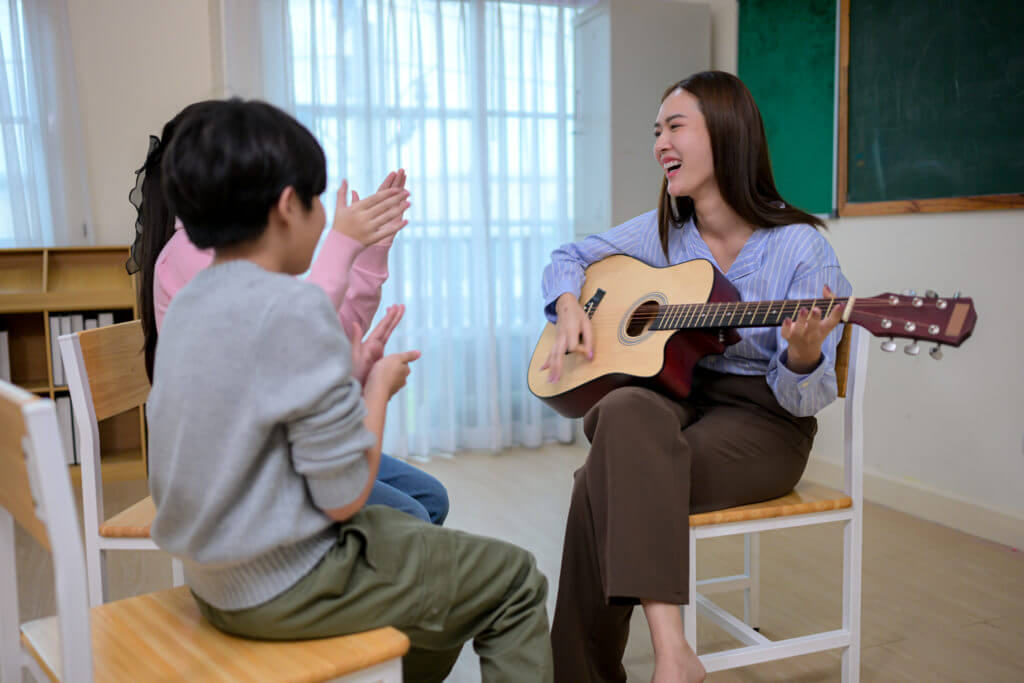
Music has a unique way of reaching children, especially those who struggle to express themselves through words. The benefits of pediatric music therapy are abundant. This therapy is a research-based clinical practice, using active and engaging music making to help kids build cognitive, communication, physical, social, and emotional skills in a playful, low-pressure environment. Learn how music therapy may be beneficial to your child’s development.
What is Music Therapy?
Music therapy is a clinical, evidence based practice led by a board certified music therapist. It uses structured therapeutic music experiences, involving singing, instrument playing, songwriting, or movement, to support developmental goals.
It’s not about talent or performance. It’s about connection, communication, and growth.
Benefits of Pediatric Music Therapy
Understanding the difference helps parents know what to look for:
Brain Engagement
Music activates multiple brain regions at once, strengthening pathways for language, memory, and attention.
Attention & Focus
Structured rhythm activities help children practice sustained attention and impulse control.
Communication
For nonverbal children especially, music becomes a bridge—offering a safe way to communicate through sound, gesture, or instrument play.
Motor Development
Drumming, dancing, and instrument play improve coordination, balance, and fine motor control.
Sensory integration
Music provides predictable sensory input that helps children with sensory processing challenges.
Social connection
Music-making encourages turn taking, joint attention, and cooperative play.
Emotional Regulation
Rhythm and melody help children calm their bodies, express feelings, and build coping skills.
Self-Esteem & Confidence
Mastering a musical skill or making new music gives children a sense of accomplishment and pride.
Which Children Can Benefit from Music Therapy?
Music therapy supports children with:
• Autism spectrum disorder
• ADHD
• Speech and language delays
• Anxiety or emotional regulation challenges
• Sensory processing differences
• Developmental delays
• Trauma or grief
But it’s also wonderful for any child who connects with music.
What a Music Therapy Session Looks Like
A typical session may include:
• Instrument play to build motor and social skills
• Singing familiar songs to support speech and language
• Movement to music for sensory and motor development
• Songwriting for emotional expression
• Relaxation with music to improve coping skills
Sessions are playful, child led, and tailored to each child’s developmental needs.
Music therapy is more than entertainment—it’s a powerful, research backed therapy that helps children grow holistically. Whether a child is navigating developmental challenges or simply needs a creative outlet, music therapy offers a path toward learning and connection.
FOR GREAT STRIDES PEDIATRIC REHABILITATION IN FLORIDA AND VIRGINIA
Start your child’s music therapy journey today by completing our new client paperwork. If you have further questions or need help with anything at all, call us Monday-Friday at (904) 886-3228.
FOR H2 HEALTH KIDS IN TEXAS, THERAPEDS WORKS IN TEXAS, AND ATLAS KIDS IN KENTUCKY
If your child is ready to start music therapy, complete our online appointment request form. If you have further questions or need help with anything at all, call us Monday-Friday at (800) 699-9395.
NOT SURE WHICH LOCATION IS BEST FOR YOU?
The H2 Health network has clinics across the country that specialize in helping not only children, but people of all ages. To learn if your closest clinic supports your child’s needs, please visit the Locations page of our website. You can email any questions to contactus@h2health.com.
We look forward to working with you and your child through the benefits of pediatric music therapy!


